
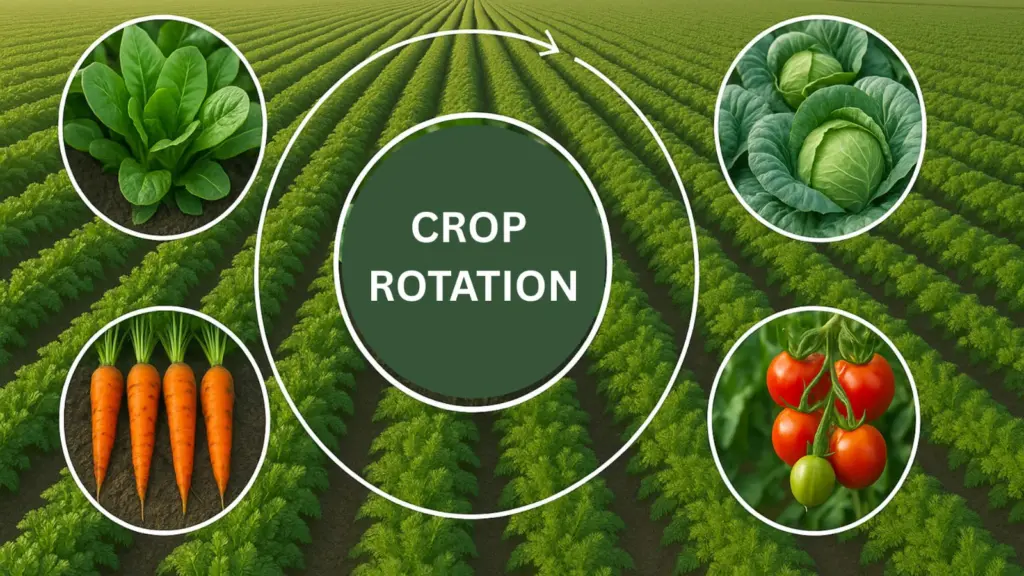
Many beginner farmers start by thinking mainly about what they want to grow this season, but strong farm planning is not only about this year. It is also about what was grown before, what will be grown next, and how those choices affect the soil, pests, disease pressure, and overall crop performance. This is where crop rotation benefits become so important. Crop rotation is one of the most practical and effective tools a grower can use to build a stronger farming system without relying only on constant correction. It helps the field stay more balanced, supports healthier soil, interrupts recurring problems, and improves long-term productivity.
At its most basic level, crop rotation means changing what is grown in a particular area over time instead of planting the same type of crop in the same place season after season. That idea sounds simple, but its effects are powerful. Different crops use nutrients differently, develop different root systems, leave different residues behind, and interact with pests and diseases in different ways. When crops are rotated thoughtfully, the field becomes less predictable for pests, more supportive for soil life, and generally easier to manage over multiple seasons.
For small farms, market gardens, and beginner growers, crop rotation is especially valuable because it reduces the risk of creating repeated problems in the same beds or sections of the field. Planting the same crop family in the same place too often can slowly weaken the system. Nutrient demand may become unbalanced, disease organisms may build up, and pests may find a more stable environment than the farmer intended. Rotation helps break that pattern by changing the biological and management rhythm of the land.
This guide explains the main benefits of crop rotation in a practical way. We will look at what crop rotation really means, how it improves soil health, how it helps with pests and disease, what simple rotation models beginners can follow, the common mistakes growers make, and how to build a workable rotation plan for a small farm. The goal is not to create a complicated academic system. The goal is to help you use rotation as a realistic farm management tool that supports stronger fields and better results over time.
What Crop Rotation Really Means
Crop rotation means growing different crops in sequence on the same piece of land rather than repeating the same crop or crop family too frequently in the same location. In practical farming terms, this means one bed, block, or field area is used by different crops over time according to a planned order. That order is usually based on plant family, nutrient demand, rooting pattern, pest considerations, seasonal timing, and soil-building goals.
For example, a grower might follow a heavy-feeding fruiting crop with a legume or a lighter-demand crop. Another area might move from leafy vegetables into root crops, then into a soil-covering crop. The point is not just variety for its own sake. The point is to create a healthier and more stable production cycle. Rotation gives the land a different pattern of use, which often helps restore balance and reduce repeated stress.
It is also important to understand that crop rotation is not exactly the same as simply planting something different next time. A useful rotation considers plant families and system function. If a grower plants tomatoes one season and peppers the next in the same spot, that may look like change, but both crops are in the same family and may share similar pest or disease vulnerabilities. A better rotation would place a less closely related crop in that space and reduce the chance of carrying the same problems forward.
Good rotation planning can be simple or complex depending on the size of the farm. On a small farm, even a basic two-year or three-year rotation can make a noticeable difference. On larger or more diversified farms, the rotation system may involve more detailed field mapping and scheduling. In both cases, the purpose stays the same: improve field function and avoid the damage that comes from repetition without strategy.
Main Benefits of Crop Rotation
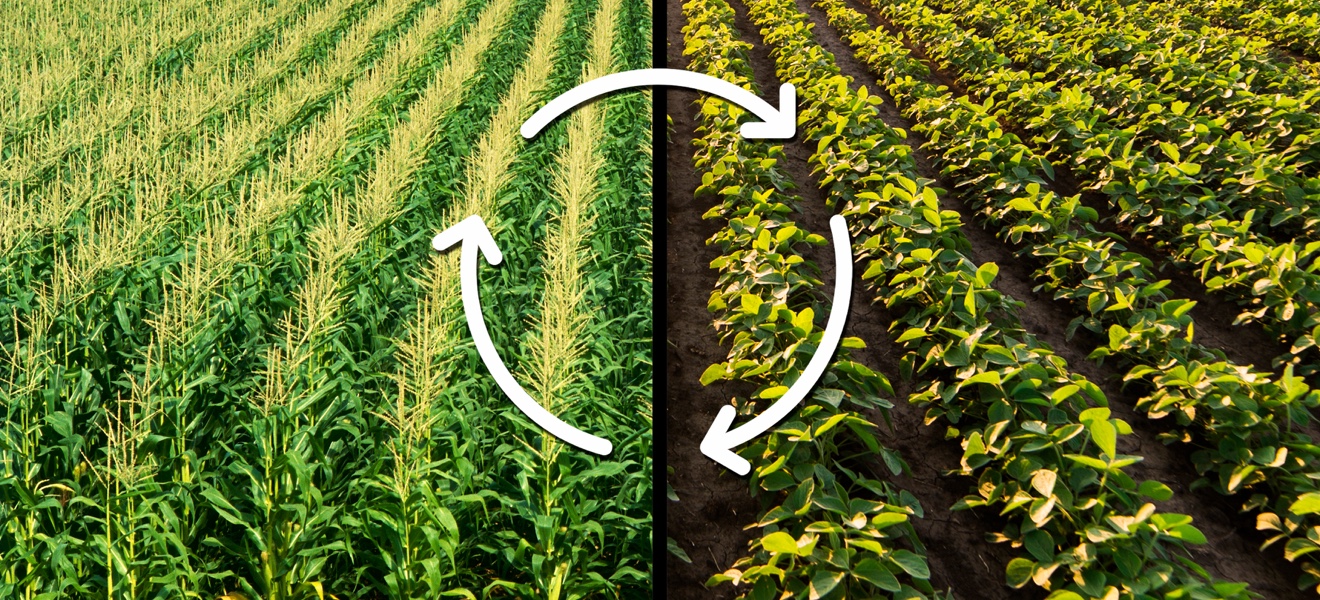
Crop rotation offers several major benefits that affect both short-term field performance and long-term farm stability. One of the most important is improved nutrient balance. Different crops draw on the soil in different ways. Some are heavy feeders, others are lighter users, and some contribute valuable residues or biological support that help the following crop perform better. Rotating these crops helps prevent the same nutrient demand pattern from repeating endlessly in one area.
Another major benefit is better soil structure and field diversity. Different root systems explore the soil in different ways. Some crops have dense fibrous roots, others send deeper taproots, and others leave behind residues that break down differently. Over time, this variation supports a healthier and more dynamic soil environment. If you want to understand how these changes connect to the broader condition of the field, it helps to study long-term soil improvement methods as part of a more complete farm strategy.
Rotation also helps reduce pest and disease pressure. Many pests and pathogens become more established when their preferred host appears in the same place too often. A repeated crop pattern gives them a stable target. Rotation removes that predictability and often reduces the pressure that builds up over time. This does not guarantee that problems will disappear completely, but it often makes them easier to manage.
Yield stability is another important advantage. Fields that are rotated thoughtfully often perform more consistently because the production system is not repeatedly stressing the same area in the same way. Better balance in soil use, reduced pest buildup, and stronger field conditions can all contribute to more reliable crops over multiple seasons. For farmers trying to reduce risk and improve decision-making, this consistency is extremely valuable.
Finally, crop rotation supports more strategic farm planning. Instead of thinking only one planting ahead, growers begin thinking in sequences. That mindset usually improves the whole farm. It encourages better records, better layout awareness, and more thoughtful timing decisions. In other words, crop rotation does not only improve the field. It improves the way the farmer thinks about the field.
How Crop Rotation Supports Soil Health
Soil health improves when the land is used in more balanced and varied ways. One of the reasons rotation is so effective is that it changes how roots interact with the soil from season to season. Different crops affect the underground environment differently. Some loosen deeper zones, some contribute more residue near the surface, and some help create better biological diversity in the root zone. When that variation is repeated across seasons, the soil often becomes more functional and resilient.
Rotation also reduces the chance that one area of the field will be pushed repeatedly by the same nutrient demand and the same management pattern. A crop that requires intensive feeding and leaves little protective residue may be followed by something that contributes more cover or uses nutrients differently. That shift helps the field recover and rebalance instead of staying under the same pressure year after year.
Another benefit is that crop rotation often works well alongside cover cropping. A cash crop can be followed by one of several seasonal ground cover strategies that protect the surface, maintain living roots, and add biomass to the system. This expands the benefits of rotation beyond market crops alone and turns otherwise empty time into active soil-building time.
Healthy soil also depends on biological diversity, and rotation supports that by changing residues, root exudates, and the general soil environment. The more biologically monotonous a field becomes, the more vulnerable it may be to repeated stress. Rotation helps break that monotony. For farmers trying to improve water handling, root development, and long-term structure, rotation is one of the most practical ways to support broader soil improvement without overcomplicating the system.
How Rotation Helps With Pest and Disease Control
One of the best-known benefits of crop rotation is its ability to reduce pest and disease pressure over time. Many pests and pathogens are closely associated with particular crops or crop families. When those same host plants return repeatedly to the same area, the field becomes easier for those problems to exploit. Pests know where to feed, and diseases find a more stable place to survive and spread.
Rotation interrupts that cycle by changing the host environment. If the crop a pest depends on is no longer present in the same location, its life cycle may be disrupted, and population pressure may decline. The same idea applies to many soil-related diseases and recurring crop-specific problems. Rotation does not replace all pest control methods, but it is one of the strongest preventive tools available to growers who want smarter field pest prevention.
For example, if a grower plants crops from the same family in the same bed year after year, disease inoculum and pest populations may build more steadily. Even if the crop changes slightly, that shared family relationship can still support similar problems. Good rotation reduces the chance that each season becomes a continuation of last season’s biological stress.
This benefit is especially important for beginner growers because reactive pest control is usually harder and more expensive than preventive planning. When a farmer relies only on responding after problems appear, the system stays under pressure. Rotation shifts some of that work to prevention. It creates a field environment that is less predictable and less favorable for repeated outbreaks.
Of course, rotation works best when combined with other good practices such as field observation, sanitation, healthy soil management, and appropriate spacing. But even on its own, it is one of the easiest structural improvements a grower can make to reduce recurring pressure.
Simple Rotation Examples for Small Farms
Crop rotation does not need to begin as a highly technical multi-year chart with dozens of categories. For many small farms, it is enough to start with a few useful rules and a clear field map. One simple approach is to rotate by crop family. This means avoiding repeated planting of closely related crops in the same bed or block and instead moving them through different sections over time.
A common beginner-friendly example is moving from a heavy-feeding crop to a lighter-demand crop, then into a cover crop or a soil-supporting phase. Another approach is to rotate based on plant part. A grower may move from fruiting crops to leafy crops, then to root crops, then to soil-building covers. While not perfect in every case, this method helps create practical variation that is already better than repeating one crop type again and again.
Here are a few simple examples of rotation thinking:
- Fruiting crop → leafy crop → root crop: this changes both nutrient demand and root pattern.
- Heavy feeder → legume or lighter feeder → cover crop: this helps manage pressure and supports recovery.
- Main cash crop → cover crop phase: this gives the soil a period of protection and biological support.
Some farms also divide the growing area into sections and rotate whole crop groups across those sections annually. This can be easier to manage than trying to rotate at the individual bed level if the operation is larger or the layout is less intensive. The main thing is to create a system you can actually follow. A perfect plan that is too complicated to use is less valuable than a simple plan that is implemented consistently.
Common Rotation Mistakes
One common mistake is assuming that any crop change counts as a useful rotation. In reality, some crop changes do very little if the crops belong to the same family or create similar pressure in the field. A grower may feel that the bed has been rotated because the crop looks different, but biologically the field may still be facing much of the same stress.
Another mistake is planning only one season at a time. Crop rotation works best when it is considered across multiple seasons. If you only decide what to plant based on immediate convenience, it becomes harder to maintain a useful sequence. Beds may end up repeating families or skipping important recovery phases simply because there was no broader plan in place.
Ignoring cover crops is another weakness in many rotation systems. Some growers think of rotation only in terms of saleable crops, but cover crops can play a major role in field recovery and soil-building. Without them, the system may miss valuable opportunities to protect the surface, support roots, and increase biomass between production phases.
Poor record keeping also causes rotation problems. If the grower cannot remember clearly what was planted where, mistakes become much more likely. Rotation depends on accurate memory or accurate notes. A field map, bed chart, or seasonal planting log can prevent confusion and save a lot of trouble later.
Finally, some farmers design rotation plans that are too complicated for their real operation. If the system is so detailed that it becomes difficult to follow during a busy season, it may collapse under pressure. A better approach is to start with a simple and logical structure, then refine it as experience grows.
How to Build a Rotation Plan
A good rotation plan starts with a clear map of the growing area. Divide the farm into beds, blocks, or sections that are easy to track. Then identify the main crop groups you grow and note which ones are closely related. From there, think about how to move those groups through the farm in a way that reduces repetition and supports better balance over time.
Start by asking a few practical questions. Which crops are heavy feeders? Which crops share families and should not return too quickly to the same ground? Where can a cover crop fit between production cycles? Which areas of the farm are under more stress and may benefit from a more supportive sequence? These questions help make the rotation system practical instead of purely theoretical.
It also helps to plan at least one season ahead, and ideally more than one when possible. Even a simple two-year view improves decision-making. When growers think beyond the current season, they tend to make better choices about crop placement, cover cropping, and soil support. Rotation becomes part of broader farm management rather than an isolated task.
If you are a beginner, keep the plan understandable. Label your sections clearly, track families, record what was grown, and create a sequence you can remember. Over time, you can make it more sophisticated. The best crop rotation plan is not the one with the most complexity. It is the one that helps the farm function better and is realistic enough to follow under real working conditions.
Why Rotation Matters More Over Time
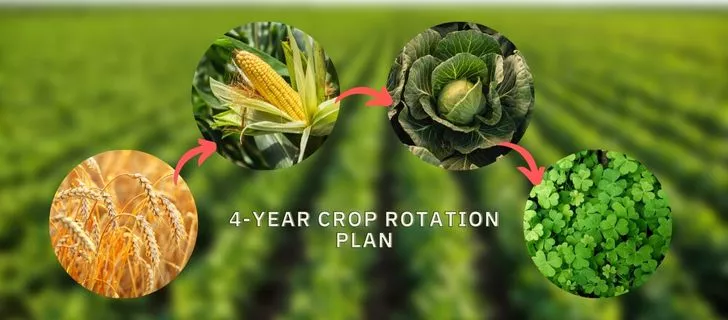
Some farming practices produce obvious results immediately, while others reveal their value more clearly across several seasons. Crop rotation often belongs to the second category. A single rotation decision may not seem dramatic in the moment, but repeated over time, those decisions shape the farm in deep and practical ways. Soil stays more balanced, pest pressure becomes less predictable, disease cycles are less stable, and the field tends to respond more consistently.
This long-term value is especially important for growers who want their farms to become easier and stronger instead of more fragile every year. Repetition without rotation slowly increases the chance that the land will face recurring stress in the same exact places. Rotation helps prevent that pattern. It spreads pressure more intelligently and creates a more thoughtful relationship between the farm and the field.
For beginners, this is one of the best reasons to develop rotation habits early. It is easier to build a good system from the beginning than to correct a poor one after repeated planting has already created avoidable problems. Rotation teaches the grower to think in seasons rather than moments, and that mindset improves nearly every part of farm management.
FAQ
How many years should a rotation be?
The ideal rotation length depends on the crops grown, the size of the farm, and the kinds of pest or disease pressure present. Even a simple two-year or three-year rotation can help, but longer and more thoughtful rotations often provide stronger benefits when they are practical to manage.
Does crop rotation work on small farms?
Yes, crop rotation can be very effective on small farms. Even where land is limited, rotating crop families, adjusting sequences, and including cover crops can reduce repetition and improve field balance. Small farms often benefit greatly because each bed or section matters so much.
Can rotation reduce pest damage?
Rotation can reduce pest damage by interrupting the repeated presence of host crops in the same area. It does not eliminate all pest problems, but it can lower pressure and make other control methods more effective.
Is changing crop families more important than changing crop types?
In many cases, yes. Changing crop families is often more meaningful because closely related crops may share nutrient patterns, pests, and diseases. A useful rotation looks beyond surface-level differences and considers biological relationships.
Do cover crops count as part of crop rotation?
Yes, cover crops can play an important role in crop rotation. They protect the soil, support roots, add biomass, and improve the sequence between cash crops. Including them often makes the rotation system much more effective.
What is the biggest beginner mistake in rotation planning?
One of the biggest mistakes is planting the same crop family too often in the same place because the system was not mapped clearly. Keeping records and using a simple field plan can prevent many of these problems.