
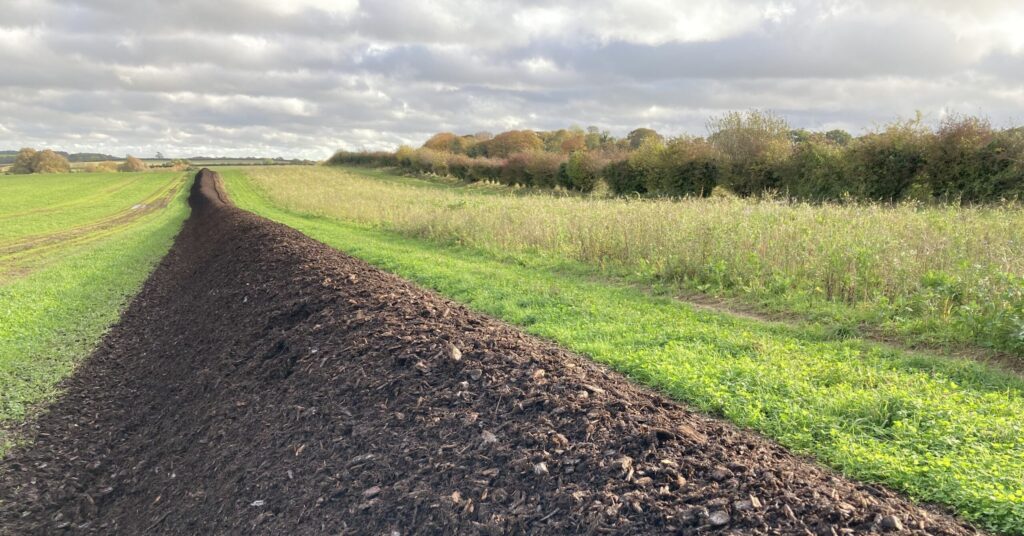
Many farms produce a steady stream of organic material that can either become a problem or become an asset. Crop residue, pulled weeds, leaves, manure, spoiled hay, bedding, and other biodegradable materials often pile up quickly during the season. If they are ignored, they can create clutter, attract pests, waste nutrients, and make farm management feel messier than it needs to be. If they are handled well, however, those same materials can become one of the most useful resources on the property. This is why composting for farms matters so much. Composting turns organic waste into a valuable soil-building tool that supports healthier fields, better moisture retention, and a more productive farm system over time.
For beginner farmers, composting is especially useful because it changes the way the farm thinks about waste. Instead of treating plant residue, manure, and other organic material as something that must be removed and forgotten, composting turns them into part of a cycle. Nutrients and organic matter can return to the land in a more stable and useful form. That does not mean every pile of farm waste automatically becomes good compost. Composting works best when it is managed with some care and understanding. But the process itself is practical, adaptable, and highly valuable for small and growing farms.
Good compost supports more than fertility alone. It can improve soil structure, help increase organic matter, support biological activity, and contribute to better water-holding capacity in the field. These are major advantages for growers who want to strengthen their production system without depending only on purchased inputs. Composting also supports cleaner farm organization because materials are handled intentionally instead of accumulating in random piles across the property.
This guide explains what farm composting is, why it matters, which materials can go into compost, what should stay out, the main composting methods used on farms, how to manage moisture, air, and temperature, and how to apply finished compost effectively. It also looks at common composting mistakes and the role compost plays in long-term soil health. For growers who want healthier fields, more efficient use of resources, and a stronger connection between farm inputs and farm outputs, composting is one of the most practical systems to understand.
What Farm Composting Is
Farm composting is the controlled breakdown of organic materials into a stable, soil-friendly product that can be returned to fields, gardens, beds, orchards, or other growing areas. On a farm, composting usually involves larger and more varied inputs than backyard composting. Instead of only kitchen scraps and a few leaves, a farm may work with crop residue, straw, animal manure, bedding, pulled plants, grass, leaves, spoiled feed, and other natural materials generated through routine production.
The goal of composting is not just to let organic matter rot slowly in a pile. The goal is to create conditions where decomposition happens in a more useful and balanced way. That means managing the pile so microorganisms can break materials down effectively while reducing odor, excess nutrient loss, and the risk of creating a wet, compacted mess. When compost matures well, it becomes darker, more crumbly, more stable, and much easier to apply productively to the soil.
Farm compost is different from raw waste because it has gone through a transformation. Fresh manure, green crop waste, or a random pile of organic material may still be too unstable, too wet, too hot, or too risky to apply directly in many cases. Finished compost is more predictable. It is easier to spread, less likely to damage crops, and more useful as part of a long-term soil-building system.
Composting also fits naturally into a broader approach to farm management where resources are used more efficiently. Instead of seeing waste as an endless cleanup problem, the farmer sees it as part of a cycle that can support future growth. This change in thinking often makes the whole farm feel more organized and more connected.
Why Composting Matters on a Farm
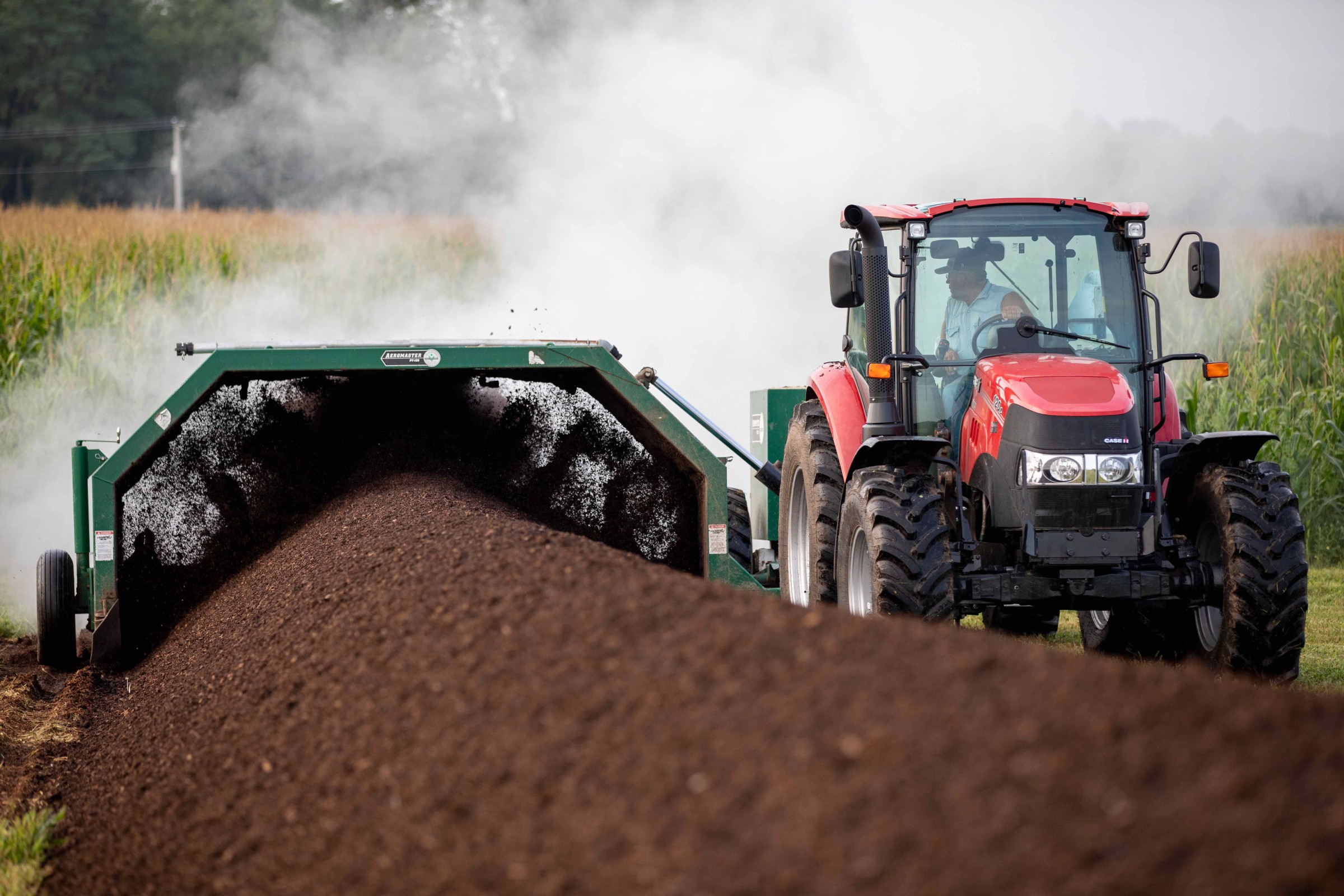
Composting matters because farms constantly generate organic materials that contain value. If these materials are wasted, the farm often loses an opportunity to improve the soil and reduce dependency on outside inputs. If they are composted well, they become a practical source of support for the land. This is one of the reasons composting is not just a side project. It can become a meaningful part of a stronger farm system.
One major benefit of composting is waste reduction. Instead of creating piles of plant residue and manure that sit unused, the farm can process them into something beneficial. This helps keep the property cleaner and more manageable. It also makes seasonal cleanup more purposeful because materials are directed into a system instead of simply being moved out of the way.
Another major benefit is soil improvement. Compost contributes organic matter and helps support structure, aggregation, and biological life in the soil. When used regularly, it can play a valuable role in creating healthy soil from the ground up. Better soil often means stronger root systems, improved water behavior, and more stable crop growth over time.
Composting also helps with moisture management. Soils with better organic matter and better structure often hold water more effectively and use irrigation more efficiently. This is important for farms that want stronger crop resilience and more stable field performance, especially in systems where water management becomes difficult during dry or hot conditions.
There is also a broader management benefit. Composting encourages a more circular way of thinking. Instead of seeing fertility and soil support only in terms of purchased products, the grower begins noticing what the farm already produces that could be turned into a useful resource. This often leads to more thoughtful decisions across the entire operation.
What Materials You Can Compost
Many common farm materials can be composted successfully when they are balanced and managed well. One of the most common inputs is crop residue. After harvest, farms often have stems, leaves, roots, spent plants, and other leftover material that still contains organic value. When disease pressure is not a concern and the residues are appropriate for composting, these materials can form a major part of the compost pile.
Animal manure is another common compost ingredient. On farms with livestock or poultry, manure can be one of the most valuable organic resources available. However, it often works best when combined with drier materials such as straw, leaves, bedding, or chopped plant matter so that the pile has a healthier balance of moisture and texture. Raw manure can be very useful in a composting system, but it should not simply be treated as ready-to-use compost without proper breakdown and handling.
Leaves, grass clippings, straw, old bedding, plant trimmings, and non-diseased weeds can also be included. These materials help create structure and contribute carbon, especially when the compost mix contains wetter or more nitrogen-rich ingredients. In practical terms, good compost usually needs a mix of greener materials and drier browner materials so the breakdown process stays active without becoming foul or overly compacted.
Some farms may also include food scraps from farm kitchens or farm-related processing, provided the materials are suitable and do not introduce contamination or attract serious pest issues. Small-scale operations often benefit from using as many safe on-farm organic inputs as possible because this strengthens the circular value of composting.
The best compost ingredients are usually those that are natural, biodegradable, and free from harmful contamination. A farmer does not need a perfect list of exotic ingredients. Most good farm compost begins with ordinary materials the farm already has in abundance.
What Should Not Go Into Farm Compost
Not every organic-looking material belongs in the compost pile. One of the most important composting skills is knowing what to leave out. Diseased plant material is one major caution. If plants are heavily infected with serious diseases and the composting process will not reliably reach and maintain conditions that break those problems down safely, it may be wiser to keep that material out. Otherwise, the farm risks cycling the problem back into production later.
Weeds with mature seeds can also be risky if the compost system is not hot and active enough to destroy them. Adding these materials carelessly may simply move the weed problem into future beds or fields. Some tough perennial weeds can be especially troublesome if they survive the composting process and return after application.
Contaminated materials should also stay out. This includes anything treated with inappropriate chemicals, anything mixed with plastic, metal, synthetic twine, treated wood, or unknown waste sources that might compromise the final compost. A compost pile should not become a place where questionable farm debris disappears. The goal is to create a clean and useful soil input, not a disguised waste pile.
Large amounts of meat, dairy, oily foods, or heavily processed material are usually poor choices in most farm composting systems unless the farm has a specialized setup to handle them. These materials can create odor issues and attract unwanted animals. For most ordinary farm compost systems, it is better to focus on clean plant materials, bedding, manure, and similar natural inputs.
If the farm is pursuing stricter production standards or long-term certification goals, it is especially important to think carefully about inputs. Compost quality begins with input quality, and careless choices at the beginning often create problems later.
Main Composting Methods for Farms
There is no single composting method that works for every farm. The right method depends on farm size, available space, labor, equipment, climate, and the type of organic material being handled. However, most farm composting systems fall into a few practical categories.
Static piles are one of the simplest methods. The farmer builds a pile and allows it to decompose with limited turning. This can work well on farms with enough time and space, especially where labor is limited. However, static piles usually require good balance from the beginning because they are not being actively adjusted as often.
Turned piles are common on many farms. In this method, the compost pile is turned periodically to improve aeration, redistribute moisture, and help decomposition happen more evenly. Turning can speed the process and often produces more uniform compost, but it requires more labor or equipment depending on the scale.
Bins or contained systems may be useful on smaller farms or in areas where neatness, space control, or organization matters. These systems can make it easier to separate fresh material from more mature compost and may suit growers who want a more compact process.
Vermicomposting uses worms to help process organic materials and is often more suitable for smaller-scale use rather than large volumes of rough farm waste. It can still be a valuable part of some operations, especially where the farm wants high-quality compost from selected inputs rather than bulk field-scale material.
No matter which method is used, the main principle stays the same: the compost needs enough balance, air, and moisture to decompose effectively. The method matters, but management matters more.
Managing Moisture, Air, and Temperature
Successful composting depends heavily on managing three basic conditions: moisture, aeration, and temperature. If these are badly out of balance, the compost pile may slow down, smell unpleasant, become slimy, or fail to break down materials properly. Fortunately, the basic logic is straightforward once the grower understands what the pile needs.
Moisture matters because the microorganisms that break down compost need water in order to stay active. A pile that is too dry decomposes slowly and may appear almost frozen in place. A pile that is too wet often becomes heavy, compacted, and low in oxygen, which can lead to odor and poor-quality breakdown. Good compost moisture usually feels damp rather than soaked. It should hold together somewhat when squeezed but should not drip excessively.
Air is equally important. Composting works best when oxygen can move through the pile. If the material becomes packed too tightly or too wet, oxygen drops and the pile can begin to smell sour or rotten. Turning the pile, using coarse materials, and balancing wet materials with drier structure-rich inputs can all help maintain better airflow.
Temperature reflects biological activity. A working compost pile usually warms up because microorganisms are active and breaking materials down. Higher temperatures can help speed decomposition and may reduce some weed seeds and pathogens when managed properly. However, temperature alone is not the entire goal. The goal is a balanced process that produces stable compost rather than simply making the pile hot once and forgetting about it.
When a farmer watches these three conditions together, composting becomes easier to manage. A pile that smells bad may need more air or less moisture. A pile that stays cool and inactive may need more nitrogen-rich material, more water, or better size and structure. Over time, the farmer learns to read the compost pile almost like a field condition.
How and When to Apply Compost
Finished compost is most useful when it is applied with purpose. Simply spreading it anywhere there is empty ground is not the best approach. Instead, the grower should think about where compost will have the greatest value and how it fits into the farm’s broader soil-building strategy.
One common time to apply compost is before planting. This allows the compost to become part of bed preparation or field preparation so that the crop starts in a stronger soil environment. Compost may also be useful during longer-term soil-building phases when the goal is to improve structure and organic matter rather than only feed an immediate crop.
Application rate depends on the crop system, the condition of the soil, and the amount of compost available. On smaller farms, compost may be focused on the areas that need the most improvement or on the highest-value growing spaces. On larger farms, compost may be used more strategically based on field condition and available volume. The key is not to assume that more is always better. Compost should support the system, not overwhelm it.
It also helps to match compost application with other practices. Compost becomes even more valuable when combined with covering soil between cash crops, good rotation, reduced unnecessary disturbance, and steady observation of soil condition. Compost is a major tool, but it works best as part of a connected system rather than as an isolated fix.
Finished compost should look and feel more stable than fresh organic waste. It should be darker, more uniform, and less recognizable as its original materials. When compost has matured well, it is easier to spread, easier to incorporate where appropriate, and much less likely to create problems in the field.
Common Mistakes When Composting on a Farm
One common composting mistake is building a pile without enough balance. If the pile contains mostly wet green material and very little dry structural material, it may become slimy, compacted, and foul-smelling. If it contains too much dry material and not enough active nitrogen-rich input, decomposition may become very slow. Good compost usually needs a thoughtful mix rather than one repeated input.
Another mistake is ignoring the pile after it is made. Composting is not always high-maintenance, but it does need some observation. Moisture may need adjusting, the pile may need turning, or certain materials may need better shredding or mixing. A neglected pile often becomes far less useful than one managed with simple attention.
Using contaminated or questionable materials is another serious error. Poor inputs create poor compost. The farm should know what is going into the pile and whether those inputs support the final use. If the compost is meant to strengthen the soil, the inputs should be chosen with that purpose in mind.
Applying unfinished compost too soon is also a frequent problem. Material that has not stabilized properly may still be heating, decomposing aggressively, or tying up nutrients in a way that is not ideal for crops. Patience matters. Finished compost is usually much more valuable than half-processed material spread too early.
Finally, some growers expect compost alone to solve every soil problem. Compost is powerful, but it works best alongside other field practices. It is one tool within a larger soil-building strategy, not a complete replacement for good farm management.
Composting as Part of Long-Term Soil Building
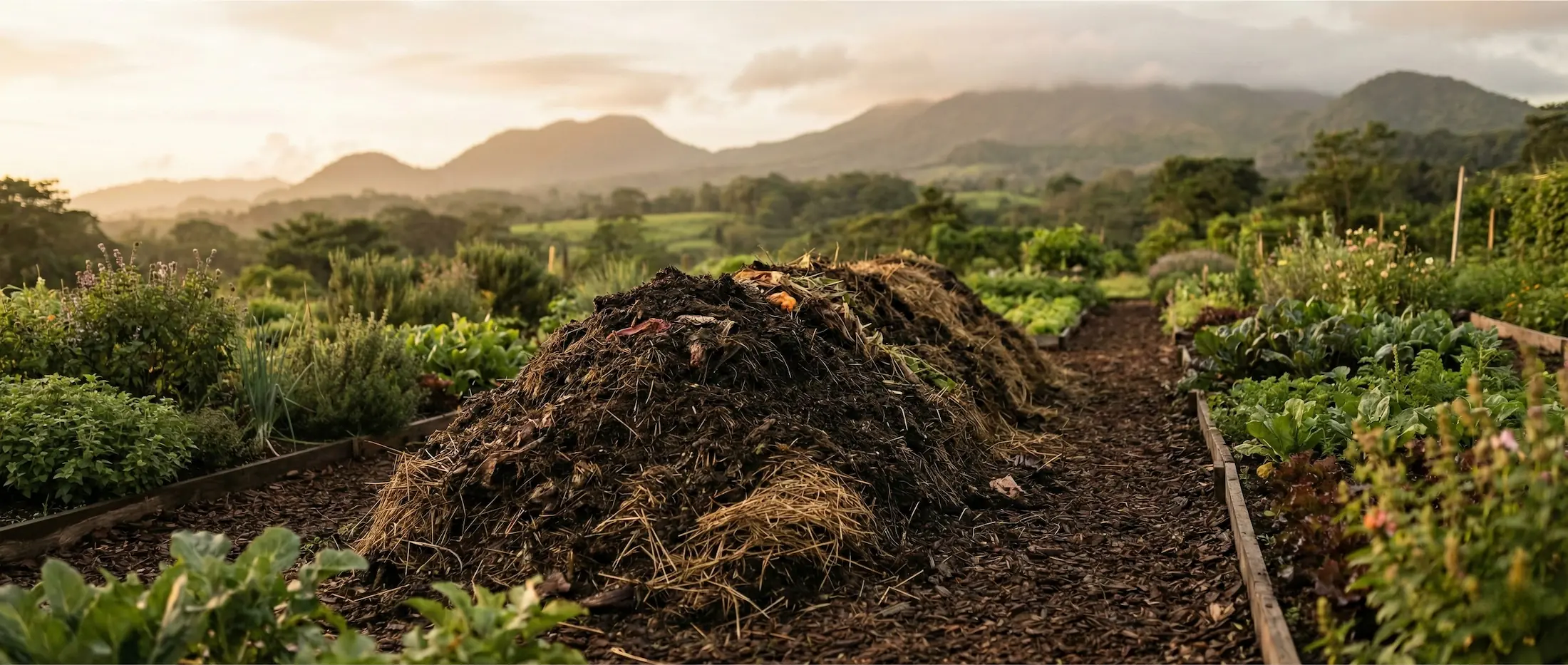
Composting becomes most valuable when the farm sees it as part of a long-term improvement plan. A single compost application can be helpful, but repeated thoughtful use over time often creates the most meaningful change. Organic matter builds gradually, structure improves gradually, and soil biology becomes more active when the field receives steady support. In that sense, composting is not only about this season’s waste. It is about next season’s soil and the farm’s long-term resilience.
This long-term view matters because better soil tends to make the whole farm easier to manage. Crops root more consistently, water behaves more predictably, and the field often becomes less fragile under stress. Compost contributes to that process by feeding the system rather than only the crop. It helps the land become stronger, which is one of the most practical investments any farmer can make.
Composting also fits naturally into lower-input and more thoughtful production systems. Farms interested in farm transition to organic standards often benefit from stronger compost management because it encourages careful handling of inputs, better records, and a more circular relationship between production and soil care. Even farms that are not pursuing certification can gain from the discipline and efficiency that composting encourages.
When the farm learns to see residues, bedding, manure, and plant waste as future soil support rather than simple leftovers, the operation becomes more connected. Composting helps close loops, reduce waste, and strengthen the ground that future crops will depend on. That is why it remains one of the most practical and rewarding systems a farm can build.
FAQ
Can compost replace fertilizer?
Compost can support soil fertility and improve soil condition, but whether it can fully replace fertilizer depends on the farm system, the crop, the soil condition, and the nutrient needs involved. On many farms, compost plays a major supportive role rather than acting as the only fertility source.
How long does compost take to mature?
The time depends on the materials used, pile size, moisture, aeration, temperature, and management. Some compost systems mature relatively quickly when conditions are well balanced and the pile is turned regularly, while others take much longer. The key is to wait until the compost is stable and well broken down before applying it widely.
Is manure compost safe for crops?
Manure can become a very useful compost ingredient when it is managed properly and allowed to compost thoroughly. Raw manure should not be treated the same as finished compost. Proper composting helps stabilize the material and makes it more useful and safer for many farm applications.
What is the biggest composting mistake beginners make?
One of the biggest mistakes is creating a pile with poor balance and then ignoring it. Too much wet material, too little air, or a lack of structural ingredients can lead to odor, slow decomposition, and poor-quality compost. Simple observation and adjustment solve many of these problems.
Should diseased plants go into compost?
That depends on the disease and the composting conditions. If the compost system cannot reliably handle the material safely, it is usually better to keep heavily diseased plants out. Reintroducing serious disease issues into production is not worth the risk.
Why does compost help soil so much?
Compost helps because it contributes organic matter, supports biological activity, improves structure, and often helps soil manage water more effectively. Over time, these benefits can strengthen the whole field system rather than only providing a short-term effect.
Can small farms benefit from composting even without livestock?
Yes, small farms without livestock can still compost leaves, crop residue, weeds without mature seeds, grass clippings, bedding materials, and other clean organic matter. Livestock manure is helpful, but it is not required for composting to be valuable.
Is composting worth the labor on a small farm?
In many cases, yes. Composting can reduce waste, improve soil, support better water behavior, and create a more circular farm system. The labor is usually most worthwhile when the process is designed simply and managed in a way that fits the scale of the farm.
For more foundational guidance, visit the central farming resource.